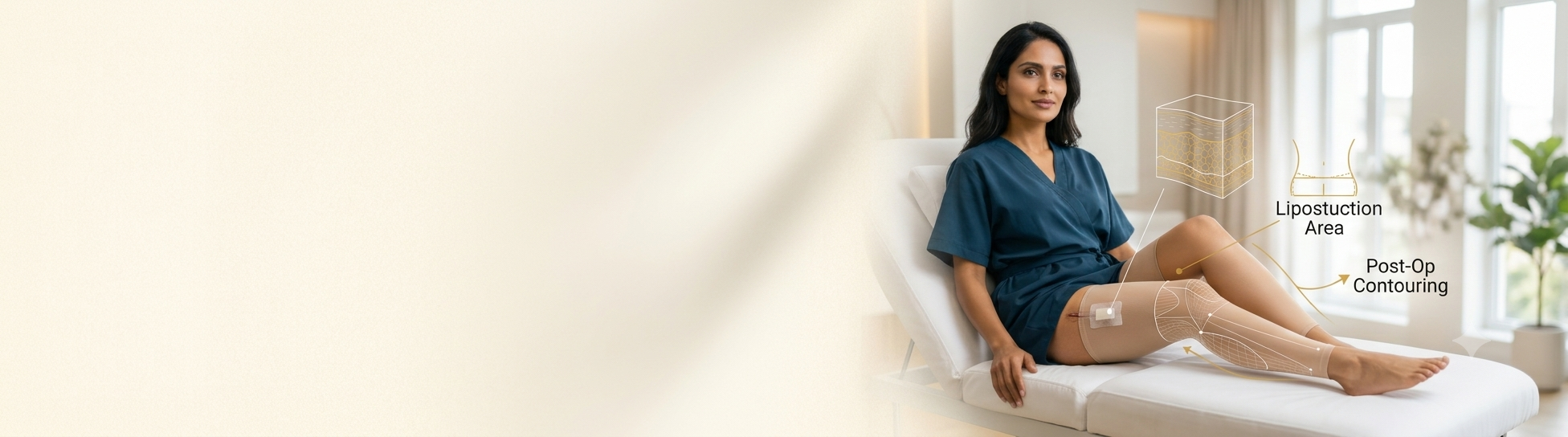
Thigh liposuction can help reshape the legs by removing localized fat deposits that remain despite diet and exercise. The procedure may be performed on the inner thighs, outer thighs, or other carefully selected areas to create a more balanced lower-body contour. Liposuction is intended for body contouring rather than weight loss, and the quality of the final result depends not only on the procedure itself but also on how the body heals afterward.
Recovery is therefore an important part of the treatment journey. Swelling, bruising, tenderness, and temporary changes in how the thighs look or feel are common during healing. Knowing what to expect can make the postoperative period easier to manage and help patients recognize when they should contact their surgeon.
The first few days after surgery are generally when swelling, soreness, and bruising are most noticeable. The thighs may feel tight, tender, or sensitive when walking or changing position. Small incision sites are also present where the liposuction cannula was introduced.
Patients are commonly asked to wear a compression garment after the procedure. Compression provides support to the treated tissues and can help manage postoperative swelling while the thighs settle into their new contour. The exact type of garment and how long it should be worn will depend on the surgeon's instructions and the extent of treatment.
Pain is usually managed with medication prescribed or recommended by the surgical team. Patients should take medicines exactly as directed rather than changing the dose or schedule themselves.
Rest is important during the early recovery period, but remaining completely inactive is generally not recommended. Gentle walking may be encouraged soon after surgery because movement supports circulation and helps patients gradually return to their normal routine. More demanding exercise, however, should be avoided until the surgeon confirms that it is safe.
During the first week, the thighs can look larger than expected because of swelling. Liposuction creates changes beneath the skin, and the surrounding tissues require time to recover.
Bruising can also change colour as it fades. Tenderness and numbness may occur around treated areas, and some patients notice that one thigh appears slightly more swollen than the other during the initial stages of healing.
Keeping follow-up appointments during this period allows the surgeon to monitor incision healing, swelling, and overall progress.
For many patients, discomfort becomes significantly easier to manage during the second and third weeks. Swelling and bruising gradually decrease, walking becomes more comfortable, and everyday activities may feel easier.
Recovery time varies depending on factors such as how much fat was removed, how many areas were treated, individual healing ability, and the surgical technique used. Someone who has undergone limited treatment may return to routine activities sooner than a patient who has had extensive inner and outer thigh contouring.
Patients should resist the temptation to resume strenuous workouts simply because they feel better. Running, heavy resistance training, intense leg exercises, and other high-impact activities may need to remain restricted for several weeks. The surgeon should provide individualized guidance about returning to exercise.
Some improvement in thigh shape may be noticeable soon after surgery, but early appearance should not be considered the final result. Swelling can temporarily hide the new contour, and the tissues continue changing as healing progresses.
More noticeable definition typically develops as postoperative swelling subsides. Final results may take several months to become apparent. One thigh-liposuction resource notes that patients may need approximately three to six months to appreciate the finished contour as swelling settles and the skin adapts to the underlying shape.
Liposuction permanently removes treated fat cells, but it does not prevent the remaining fat cells from enlarging if a person gains weight in the future. Maintaining a relatively stable weight through sustainable eating and activity habits can therefore help preserve the result.
Following the surgeon's instructions should take priority over general recovery advice because every procedure is different. Helpful postoperative habits typically include:
Patients should also avoid judging results too early. Temporary swelling, unevenness, firmness, and changes in sensation can occur while tissues are healing.
Some discomfort and swelling are expected after liposuction, but unusual or worsening symptoms deserve medical attention. Patients should contact their surgical team if they develop concerns such as increasing rather than improving pain, significant redness, unusual drainage, fever, severe swelling, shortness of breath, chest discomfort, or other symptoms their surgeon has advised them to watch for.
Liposuction is a surgical procedure and carries potential complications, making proper postoperative monitoring important.
Thigh liposuction recovery does not happen overnight. The first stage focuses on controlling discomfort and swelling, while later weeks allow the tissues to settle and the new contour to become increasingly visible.
Following postoperative instructions, avoiding premature strenuous activity, wearing compression when recommended, and keeping follow-up appointments can all support recovery. Most importantly, patients should evaluate their progress over months rather than days. Allowing the body enough time to heal provides a much clearer picture of the final thigh shape and overall surgical result.
Matiz Clinic Timings
Monday - Saturday: 10:00 AM - 7:00 PM
Sunday: Closed
Bangalore Clinic Timings
Monday - Saturday: 10:00 AM - 6:00 PM
(Video consultations also available)
Sunday: Closed
Hyderabad Clinic Timings
Monday - Saturday: 10:00 AM - 6:00 PM
(By prior appointment only - please call to book)
Sunday: Closed
Thigh liposuction can help reshape the legs by removing l...Read more

The under-eye area is one of the first places where signs...Read more

Modern aesthetic medicine has moved well beyond treating ...Read more
Burns and scalds are among the most common household inju...Read more

Barbie Botox has become one of the most talked-about aest...Read more