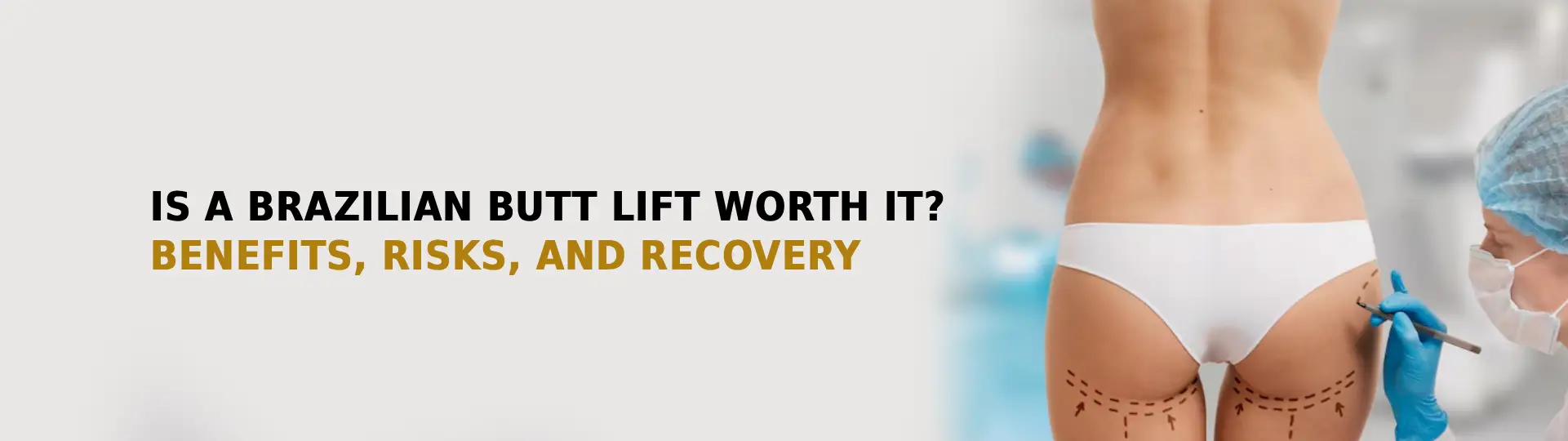
For many people, a fuller lower body is about proportion: a defined waist, smoother hips, and clothing that fits with more confidence. A Brazilian butt lift, often called a BBL, can help create that look, but it is still surgery. Before deciding whether it is worth it, it helps to understand what it can do, who it suits, and what recovery involves.
A Brazilian butt lift is a cosmetic body-contouring procedure that uses your own fat to enhance the buttocks. Fat is removed with liposuction from areas such as the abdomen, waist, back, hips, or thighs. It is then processed and injected into the buttocks to improve shape and fullness.
Despite the name, a BBL is not a true “lift” like a skin-tightening procedure. It does not mainly remove loose skin. Its purpose is to add volume, improve curves, and create a rounder, more lifted-looking appearance.
A BBL changes two areas at once. Liposuction reduces unwanted fat in selected donor areas, which may make the waist, lower back, or thighs appear slimmer. The transferred fat then adds volume and projection to the buttocks.
Because the procedure uses your own fat, results can look and feel natural. However, not all transferred fat survives. The final result usually looks softer and more settled after healing.
A good candidate is usually in good general health, at a stable weight, and has enough extra fat for transfer. Non-smokers are often better candidates because smoking can interfere with healing and fat survival.
A BBL can enhance natural proportions, but it cannot give the same result to every body type. Someone with very little body fat may need another option. A consultation with a qualified plastic surgeon helps determine whether your skin quality, health history, donor fat, and goals make you suitable.
BBL results can last for years, especially when a person maintains a steady weight. Once the transferred fat cells establish a blood supply, they act like fat cells elsewhere in the body. This means weight gain or loss can change the size and shape over time. A balanced lifestyle and proper post-surgical care can help preserve the outcome.
Before surgery, you will meet with a plastic surgeon for a full evaluation. The surgeon will review your medical history, medications, allergies, previous procedures, and lifestyle habits. They will also examine donor areas and discuss your desired shape.
You may be asked to stop smoking, avoid certain medications or supplements, complete lab tests, and arrange for someone to drive you home.
A BBL is usually performed under anaesthesia. The surgeon makes small incisions in the selected donor areas and removes fat with a thin tube called a cannula. The fat is then purified so healthier fat cells can be used.
Next, the surgeon injects the prepared fat into specific areas of the buttocks to improve fullness, contour, and balance. Safety-focused technique is extremely important. Proper fat placement and avoiding unsafe deeper injection areas can reduce the chance of serious complications.
After surgery, you will be monitored as you wake from anesthesia. Compression garments are often placed over liposuction areas to control swelling and support healing. Bruising, soreness, tightness, and swelling are common in the early days.
You will receive instructions for medications, incision care, showering, sleeping positions, activity limits, and follow-up visits. One of the biggest changes is avoiding direct pressure on the buttocks. Patients are often advised to sleep on their side or stomach and use a special pillow once sitting is allowed.
The advantages of a BBL include fuller buttocks, improved body proportions, natural-feeling enhancement, and slimmer donor areas from liposuction.
The risks should be taken seriously. Possible complications include infection, bleeding, fluid buildup, poor wound healing, uneven results, changes in sensation, scarring, fat loss, and anaesthesia-related problems. A rare but severe complication is fat embolism, which can be life-threatening. Choosing a board-certified plastic surgeon and an accredited surgical facility can reduce risk, but it cannot remove risk completely.
Early recovery usually takes a few weeks, but full healing may take several months. Swelling gradually improves, and the final shape often becomes clearer around three to six months. During recovery, you may need compression garments, avoid strenuous activity, limit sitting, and follow nutrition guidelines that support healing.
Many people return to non-strenuous work in about 10 to 14 days, depending on comfort level and job duties. Desk jobs may require a standing desk or an approved sitting pillow. Physically demanding work may require more time off.
A BBL may be worth it for someone who wants natural-looking enhancement, has enough donor fat, understands the risks, and is willing to follow recovery instructions. It is not worth rushing into for a trend or a bargain procedure. The best results come from careful planning, safe technique, and choosing a surgeon who puts your health first.
Matiz Clinic Timings
Monday - Saturday: 10:00 AM - 7:00 PM
Sunday: Closed
Bangalore Clinic Timings
Monday - Saturday: 10:00 AM - 6:00 PM
(Video consultations also available)
Sunday: Closed
Hyderabad Clinic Timings
Monday - Saturday: 10:00 AM - 6:00 PM
(By prior appointment only - please call to book)
Sunday: Closed
The under-eye area is one of the first places where signs...Read more

Modern aesthetic medicine has moved well beyond treating ...Read more
Burns and scalds are among the most common household inju...Read more

Barbie Botox has become one of the most talked-about aest...Read more
For many people, a fuller lower body is about proportion:...Read more